
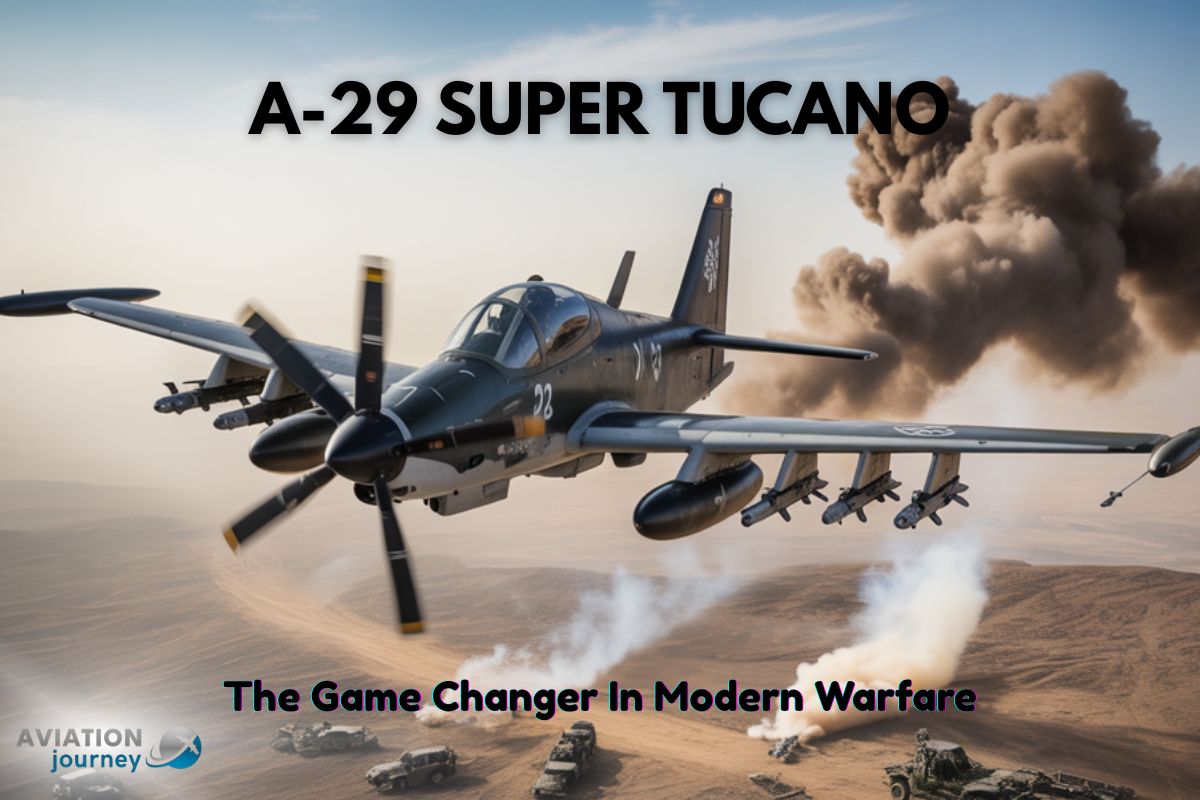
A-29 Super Tucano Light Attack Aircraft – A Real Game Changer
In the era of stealth jets and unmanned drones, the A-29 Super Tucano Light Attack Aircraft stands as a surprisingly preferred one among modern militaries. Although it may seem modest when compared to the fifth-generation fighters, this turboprop-powered warbird has showed its powers again and again in real combat regions. For countries seeking affordable, versatile, and strong-featured airpower, A-29 Super Tucano is a true game changer.
Designed for Real-World Combat
The A-29 Super Tucano Light Attack Aircraft is not merely a new trainer retro-fitted with weapons. It was designed with a purpose to go for low-intensity warfare, counter-insurgency missions and also for close air support. Its vigorous frame, advanced avionics, and strong engine can offer a lethal advantage wherever there are tough conditions with thin resources.
Unlike many of the high-end jets that usually depend on pristine runways and extreme maintenance, the A-29 Super Tucano can have the job done from unimproved airstrips, function in hot and high altitudes, and is going to be serviced in the field with limited equipment. This is for sure the reason why nations like Nigeria, Colombia, and Afghanistan have employed it in real combat operations.
Specs That Deliver Results
Here’s what makes the aircraft so effective:
- Top Speed: Its highest speed is 320 knots (approx. 590 km/h) which is fast enough for quick response without burning excess of the fuel.
- Combat Radius: Over 300 nautical miles is its combat radius that gives it the reach needed for extended missions.
- Endurance: Up to 6 hours is its flight endurance with auxiliary fuel that is perfect for long loiter times around target zones
- Payload: It has a payload capacity of over 1,500 kg (3,300 lbs) which is enough to carry bombs, rockets, and precision-directed weapons
- Engine: It is powered by one PT6A-68C turboprop engine with 1,600 shp that is reliable and also efficient.
All together endurance, and firepower are built in a way that keeps it perfect for missions where jet speed is not a requirement, but accuracy and persistence are for sure.
Powerful and Precise Weapons Load-out
One thing that really makes the A-29 Super Tucano stand out is what it brings to the fight. This isn’t just a light plane with a couple of guns slapped on. It’s fully loaded with a wide range of weapons, both smart and simple, giving it serious flexibility depending on the mission. You’ve got .50 caliber machine guns tucked into the wings, ready for classic strafing runs. But that’s just the start.
It also packs:
- 70mm rockets – great when you need to hit fast and hard
- GBU-12 Paveway II – laser-guided bombs that can thread the needle in tight urban areas
- AGM-114 Hellfire missiles – ideal for punching through armor or bunkers
- Surveillance pods and infrared targeting gear – made for tracking and locking onto targets in any weather, day or night
Put simply, it’s not just about firepower—it’s about controlled, precise engagement, especially in places where civilian safety is a concern. You rarely see this level of weapons versatility on a plane in this price range, which is exactly why it’s getting so much attention.
A-29 Super Tucano Light Attack Aircraft Price Advantage
Numbers tell the real story here, and they explain a lot about the aircraft’s worldwide appeal. The A-29 Super Tucano price sits in a range that many air forces can actually afford without cutting corners elsewhere.
- Unit cost: Depending on how it’s equipped, a single aircraft typically costs between $10 million and $18 million.
- Operating cost: Each hour in the air runs roughly around $1,000 to $2,000 per flight hour that is extremely low for battle-capable platform.
When we compare that to the F-16 that costs around $25,000 per flight hour, or let’s say a Reaper drone, that still hover around $4,000 per hour. This cost-effectiveness builds A-29 Super Tucano for sale specifically attractive to developing countries.
Battle-Tested Around the Globe
More than 260 A-29 Super Tucano units have rolled off the production line, and they’re not just sitting in hangars. They’re active in the skies of over 15 countries. Brazil, the aircraft’s birthplace, continues to fly them, while the United States has used them in international training programs. Other operators include the Philippines, Lebanon, and Angola, along with a growing number of nations throughout Africa, Latin America, and Asia.
Different countries put the A-29 Super Tucano to work in different ways. Some lean on it for pilot training, others rely on it to keep an eye on border security, and several use it regularly in frontline combat.
One of the most telling examples of its impact came out of Afghanistan, where the aircraft flew an enormous number of missions backing up Afghan ground forces. Those missions weren’t just routine flyovers or symbolic support—they pushed the aircraft into the thick of it. And it held up.
A Smart Alternative to Drones
You might wonder: Can the A-29 Super Tucano replace drones?
In many roles, it complements rather than replaces them. Drones like the MQ-9 Reaper offer persistence and zero risk to pilots, but they lack the instant decision-making and heavier payload flexibility of a manned aircraft.
Unlike drones, the A-29 can engage dynamic threats with human oversight and adapt instantly to changing battlefield conditions. It’s also more resistant to electronic warfare and GPS jamming, problems that commonly affect unmanned systems.
A Training Platform and Frontline Fighter
Another major benefit of the A-29 Super Tucano Light Attack Aircraft is its dual role. It functions both as a trainer aircraft and a combat-ready platform. This makes it ideal for air forces developing their pilot corps. Trainees can learn to fly in the A-29 and go straight into missions without changing aircraft.
A Platform Built for Upgrades
Despite its analog appearance, the A-29 is a 21st-century aircraft under the hood. Its glass cockpit, digital avionics, and helmet-mounted displays are upgradable. Future enhancements may include:
- Enhanced electronic warfare suites
- Improved data sharing systems
- Compatibility with smart munitions
- AI-assisted mission planning tools
That means this aircraft isn’t going away any time soon. In fact, it’s evolving.
Conclusion: A Proven Asset for Modern Conflicts
The A-29 Super Tucano Light Attack Aircraft has earned its nickname as a game changer. With its blend of affordability, combat versatility, and rugged performance, it fills a crucial niche in modern air power. Not every mission requires a stealth jet or a drone. Sometimes, you need a tough, efficient, and deadly platform that just gets the job done.
And that’s where the A-29 Super Tucano thrives.
FAQs
What is the A-29 Super Tucano used for?
The A-29 Super Tucano Light Attack Aircraft is designed for close air support, armed reconnaissance, counter-insurgency, and border patrol missions. Many countries also rely on it for advanced pilot training, given its dual capability as a trainer and a frontline combat aircraft.
How much does an A-29 Super Tucano cost?
Costing between $10 million and $18 million, the A-29 offers exceptional value. It operates at a fraction of the cost of jets—roughly $1,000 to $2,000 per flight hour—which is one reason it’s been adopted globally by air forces with limited budgets.
What weapons can the A-29 Super Tucano carry?
The aircraft can be outfitted with .50 caliber machine guns, 70mm rockets, and laser-guided munitions like the GBU-12 Paveway. It also supports Hellfire missiles and high-tech targeting pods, giving it flexibility for both precision strikes and general close support missions.
How many A-29 Super Tucanos have been built?
Over 260 A-29 Super Tucanos have been built and delivered to more than 15 countries. These include both U.S.-aligned and developing nations, many of which operate the aircraft in active combat zones or use it to build tactical airpower.