
First transatlantic flight Epic Journey
There’s something mysterious about the sky. It’s infinite, thrilling, and until the early 20th century, completely captivating. But then came the first transatlantic flight; a daring dive into the unknown that re-wrote what was possible in aviation and human drive.
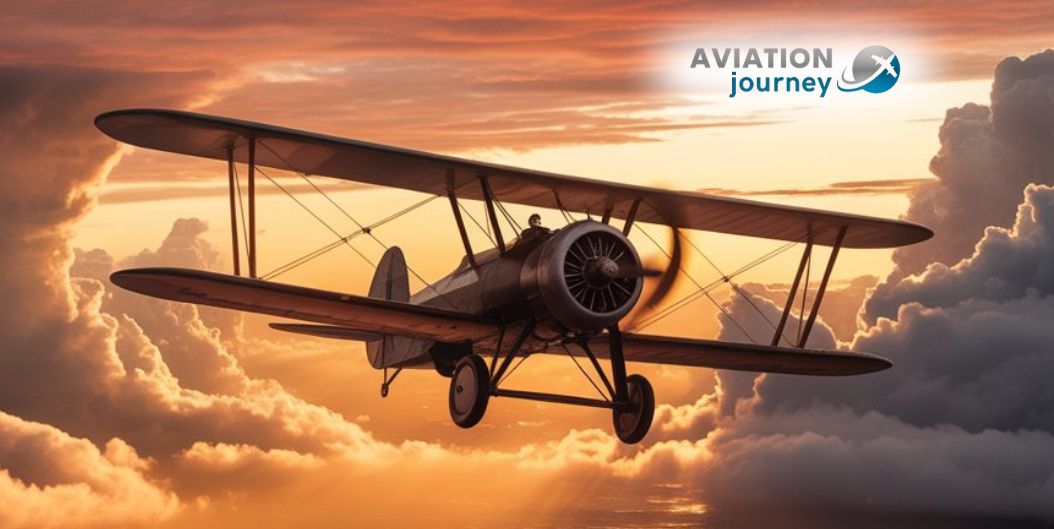
In June 1919, two former World War I aviators, John Alcock and Arthur Whitten Brown, embarked on a daring mission. They took off in a Vickers Vimy biplane from St. John’s, a Newfoundland, with one bold objective i.e. to conquer the Atlantic Ocean in one uninterrupted flight.
The flight was Relentless, dangerous and unexplored. Yet, right after exhausting 16 hours and 28 minutes, their wheels touched the bogs of Clifden, Ireland. The world’s history shifted that day. No one had dared such a feat before; without pausing to refuel, not without a moment’s rest, and with stakes higher than anyone could imagine.
Rewriting the Rules of the Sky
At that time, airplanes were little more than fundamentally fragile frames stitched in fabric. They had no autopilot, radar or GPS for guidance. Just raw instinct, sheer determination, and basic navigation instruments that often failed in dense fog or freezing rain.
Still, Alcock and Brown didn’t draw back. With engines roaring against headwinds, narrowly-escaped crashes, and even lost radio-contact. All they had was compass-based direction and relentless hope. Their success not only earned them a £10,000 prize promised by The Daily Mail but also proved to the world that long-distance air travel was more than just a dream.
Flying Solo: Lindbergh’s Ocean Odyssey
In May 1927, a new name raised in the world of aviation i.e. Charles Lindbergh. While Alcock and Brown had already embarked their place in history by achieving first nonstop transatlantic flight as a team, Lindbergh raised that bar and did it solo, making the difference.
Without any co-pilot and radio Lindbergh departed from Roosevelt Field in New York to Paris on Spirit of St. Louis. No sleep for over 33 hours. And yet, he landed to a hero’s welcome.
His feat wasn’t just a courageous act. It was a turning point that inspired the future of commercial aviation. Sparked the interest of Airlines for transatlantic routes. Finally, investors took notice and the world took flight.
First-Class in the Skies: The Dawn of Passenger Flights
It’s easy to take current global travel for granted—stretch your legs, sip some coffee, and reach your destination within hours. But rewind to the late 1930s, flying across the ocean as a passenger was seen as height of luxury—and a huge milestone.
The first transatlantic passenger flight was launched by Pan American Airways in 1939 utilizing the immense Boeing 314 Clipper, a flying boat that set off New York for Europe.
Unlike the cramped seating of early planes, the Clipper presented spacious lounges, full meals, and also sleeping berths. It wasn’t just travel; it was a high-class journey. Although it took longer than today’s flights, it laid the foundation for commercial aviation’s global expansion.
Breaking Barriers: The Women Who Soared
You really can’t talk about transatlantic milestones without giving Amelia Earhart her due credit. Sure, she wasn’t the first person to fly across the Atlantic—that title belongs to others—but she was the first woman to pull it off, and that made all the difference.
Back in 1928, she made journey as a passenger. But by 1932, she was flying alone across the Atlantic herself, just 5 years after Lindbergh. Loud storms, chilling weather, and outdated equipment, Earhart not only finished the flight but broke stereotypes.
Her courage rewrote the rules for generations of aviators, also proved that the sky wasn’t reserved for just one gender; it was for anyone brave enough to chase it.
Earlier But Not Quite There: The Forgotten Flight
Here’s a twist many forget: before Alcock and Brown, the U.S. Navy’s NC 4 flying boat crossed the Atlantic in May 1919—but with stops for fuel and rest.
While a monumental achievement, it didn’t meet the strict criteria of being nonstop. That credit goes to Alcock and Brown. Still, the NC‑4 proved that the Atlantic could be crossed by aircraft—it just needed a bit more effort.
Conclusion
Why revisit a flight from over a hundred years ago? Because it marked the beginning of global aviation as we know it. Before then? the sea meant distance and uncertainty. After it? They became a sky-bridge. The world began to feel smaller, more connected, suddenly within reach.
The bravery of pioneers like Alcock, Brown,Lindbergh, and Earhart wasn’t just about flying airplanes. It was about pushing boundaries. Their journeys weren’t made out of comfort but out of grit, bold choices, and the kind of ambition that looks up and dares to keep going.