
RAF Jets Intercept Russian Aircraft Near UK Airspace
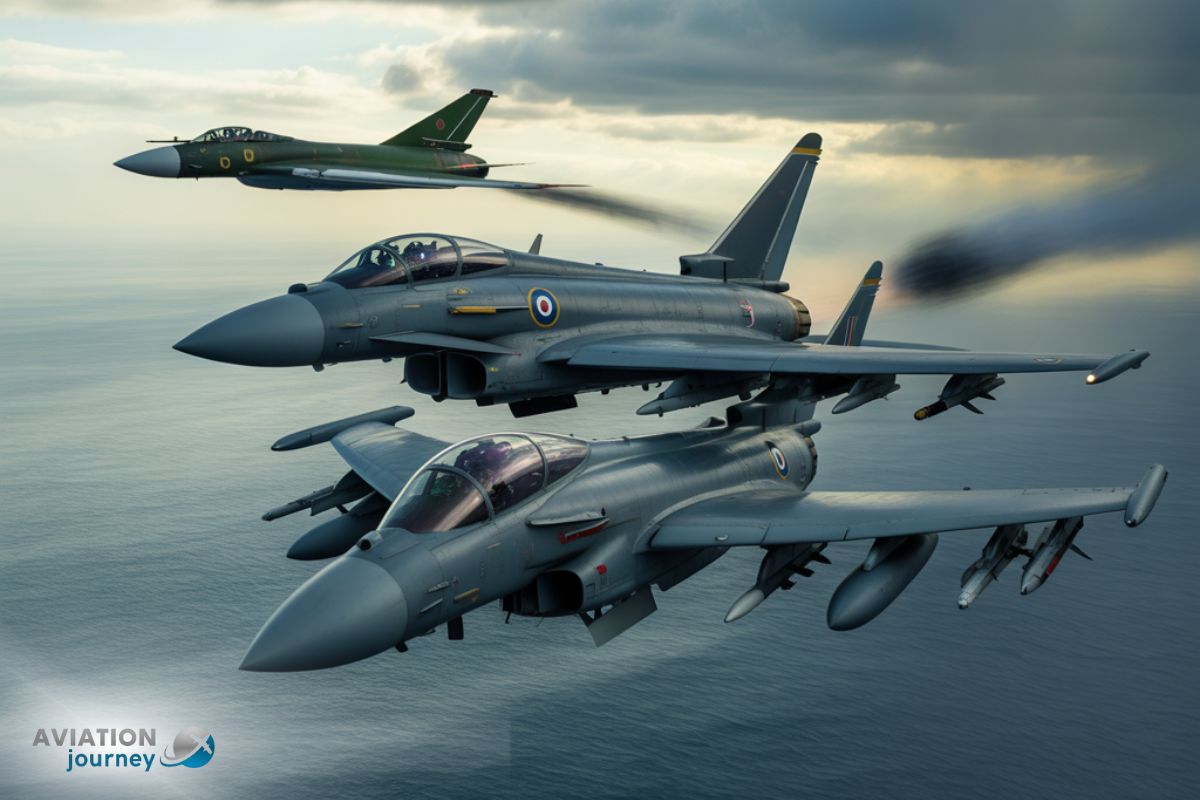
In another stark reminder of growing global strain, RAF Jets intercept Russian aircraft once more near British airspace. The moment-tense, highly sensitive, and bound to make headlines around the world in a matter of seconds-began after radar chatter indicated something unusual. The Royal Air Force mobilized its Typhoons to identify and escort the unknown aircraft away from NATO airspace.
“Interceptions are a regular part of defensive operations, but they never become routine. With raised eyes, there is considerable curiosity about what Russia is trying to accomplish, as well as what happens next among NATO nations. This is a brief synopsis of what happened and what it might mean:” The Royal Air Force launched Typhoons to intercept and escort the mysterious aircraft away from NATO territory.
RAF Jets Intercept Russian Aircraft Today: What Happened?
Britain’s Ministry of Defence confirmed a Quick Reaction Alert launch following radar detection of unidentified Russian aircraft bound for the northern UK without a transponder code or radio contact, the standard protocol for international airspace.
Typhoons stationed at RAF Lossiemouth were scrambled to identify and shadow the intruders. It is reported that the Russian aircraft were long-range bombers that usually feature in the country’s drills and reconnaissance missions.
RAF Jets Scrambled Today BBC Reports Confirm
BBC says the alert was raised immediately after the sighting of the bomber. Defense analysts described this move as “standard procedure” under NATO defense norms, although any interception carries risk when communications are limited.
The action underlines that the RAF is ready and the UK resolved to defend its airspace against any potential threat. The response times are usually less than ten minutes, which underscores a high-alert posture.
RAF Typhoon Intercept Russian Aircraft Poland Support
While today’s action took place over the UK, RAF Typhoons have long provided support to NATO allies. Recent deployments have seen Typhoons intercept Russian aircraft in Poland as a coalition defense in response to tensions associated with Ukraine.
Under NATO’s Enhanced Air Policing mission, these jets watch over Eastern European airspace, responding quickly to incursions. Poland, as a frontline NATO member, regularly hosts RAF jets on a series of rotational deployments.
RAF Jets Intercept Russian Aircraft Video Goes Viral
Video footage of the intercept As it is usually the case, in-flight videos were published online soon after the intercept mission: here are the Typhoons providing close-ups of the operation as they escorted the Russian bombers, keeping tight formation but also wisely keeping their distance.
RAF Jets Intercept Russian Aircraft 2022 Recap
Tensions aren’t new here. A 2022 moment saw RAF jets scrubbing the air with a Russian Tu-95 convoy edging forward, without warning, toward the North Atlantic. The UK has faced dozens of these sorts of aerial standoffs in recent times.
These close calls, since 2014 after the annexation of Crimea, have become frequent. It’s less about an incident and more about a pattern: Moscow showing muscle, NATO allies answering with steady readiness.
Russian Planes Over UK Today: Why It Matters
The sight of Russian aircraft above British skies is more than an air-defense concern; it’s a political statement. Such sorties test not just radar but the unity of NATO. Britain’s rapid, unequivocal response reinforces a common position: unauthorized incursions will not be tolerated.
Since there is little likelihood of easing tensions in Eastern Europe, the skies remain a very critical arena in the broader geopolitical chess game.
RAF Jets and the Ukraine Link
There is a strong feeling that such flights echo the wider operations around Ukraine. The pattern of RAF intercepts does not draw a straight line to Kyiv, but the provocations do tend to rise and fall in step with major regional events.
Russia tends to pick moments around NATO summits or Ukrainian campaigns to flex air power. These flights can be tactical signals-checking reactions or making a political point.
Intercepts: Routine or a Dangerous Provocation?
Even when described as “routine,” these missions are anything but ordinary. Intercepting another nation’s aircraft is a high-stakes moment, with pilots following tight rules of engagement. One misstep could tilt toward conflict.
Yet, the skill and discipline of RAF crews, plus adherence to international law, keep these encounters tense but controlled.
Preparedness: A Look Ahead
The latest interception proves that the RAF remains alert and fully capable of defending UK and NATO airspace. With technological upgrades, real-time radar systems, and multinational cooperation, the chances of undetected incursions are slim.
These intercepts, including today’s event where RAF jets intercept Russian aircraft, stand as evidence of effective deterrence and operational excellence.
Read Also: https://aviationjourney.com/a-29-super-tucano-light-attack-aircraft-game-changer/
FAQs
How frequent are the RAF plane intercepts of the Russian aircraft?
The RAF responds to this question through some few cases every year, with peaks during periods of increased tension between nations.
What types of Russian planes usually get intercepted?
More often than not, long-range bombers like Tu-95 or even patrol-surveillance aircraft are involved.
Why do these intercepts occur?
These warnings are about defending national airspace against unauthorized intrusion.
Are these intercepts dangerous?
They are conducted under strict protocols to ensure that the process does not escalate, although they still involve some element of risk.
Is this linked with the conflict in Ukraine?
Not always, but usually in connection with the hottest conflict zones, such as Ukraine.
Are other NATO nations also handling such intercepts?
Yes. Countries like Norway, Poland, and Baltic states have reported instances like these regularly.